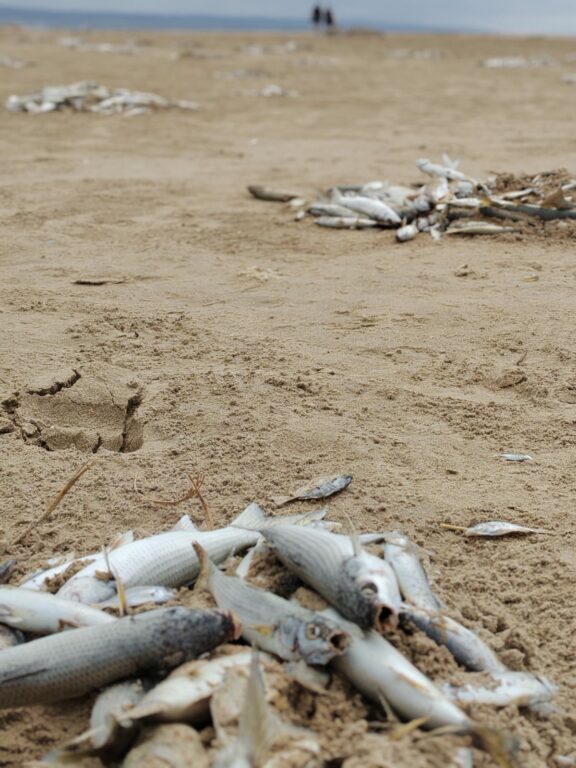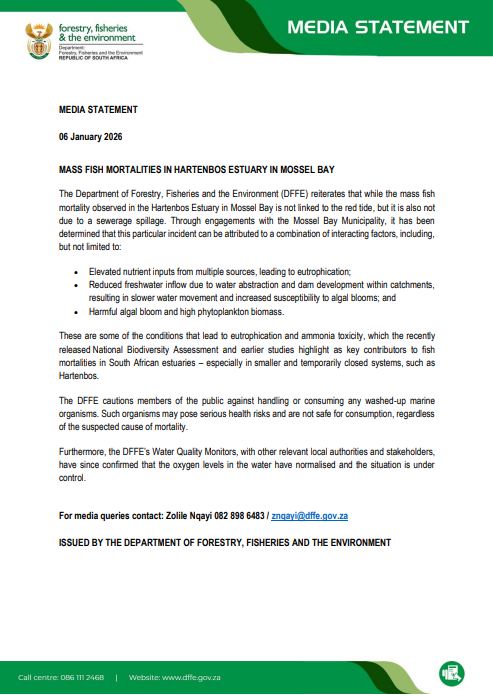

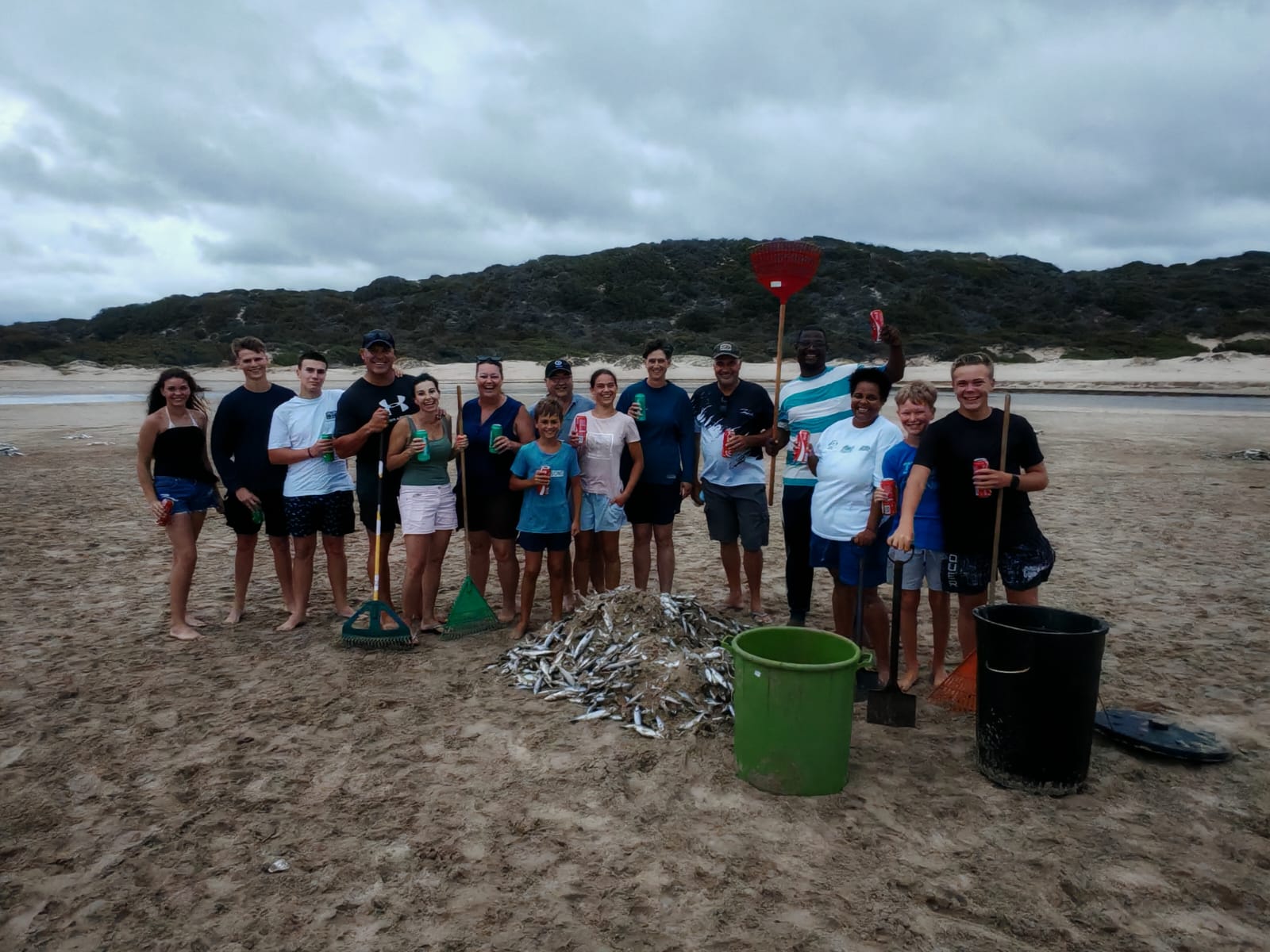
Mossel Bay Municipality takes note of misinformation regarding the cause of the recent fish mortality which occurred in the Hartenbos Estuary between 1 and 5 January 2026 and wishes to address any existing misconceptions. The Municipality is currently in correspondence with the Department of Forestry, Fisheries and the Environment to address the issue.
𝗜𝗻𝘃𝗲𝘀𝘁𝗶𝗴𝗮𝘁𝗶𝗼𝗻 𝗳𝗶𝗻𝗱𝗶𝗻𝗴𝘀
Investigations done by the Mossel Bay Municipality’s environmental department confirmed that the incident was caused by critically low oxygen levels in the water, a condition known as hypoxia, which developed due to a combination of natural ecological and physical factors.
It is important to reassure residents that this event was the result of natural ecological conditions and not due to pollution or infrastructure failure. No evidence was found of sewage spills, pumpstation breakdowns, or wastewater treatment malfunctions.
𝗪𝗮𝘁𝗲𝗿 𝗾𝘂𝗮𝗹𝗶𝘁𝘆 𝗰𝗼𝗻𝗳𝗶𝗿𝗺𝗮𝘁𝗶𝗼𝗻
Routine recreational water quality samples taken by the Garden Route District Municipality before the event confirmed that the estuary was safe for bathers, with no signs of contamination. The fish kill was instead driven by well-documented environmental processes that occur in closed estuary systems during hot, stagnant summer periods. These processes, including algal blooms and oxygen depletion, are unfortunately common in nutrient-rich estuaries across South Africa and globally. By clarifying this, the Municipality emphasises that the incident was not caused by human negligence or service delivery failures, but by natural factors beyond immediate control.
𝗖𝗮𝘂𝘀𝗲𝘀 𝗼𝗳 𝗵𝘆𝗽𝗼𝘅𝗶𝗮
Hypoxia is the result of the estuary mouth being closed, which prevented tidal flushing and oxygen replenishment, high summer temperatures and shallow waters that accelerated oxygen loss, a harmful algal bloom that consumed oxygen especially at night, and the absence of rainfall or freshwater inflow which allowed the water to stagnate. Together, these conditions caused oxygen levels to drop to levels incompatible with fish survival.
𝗥𝗲𝘀𝗽𝗼𝗻𝘀𝗲
The Municipality acted swiftly once reports of fish distress were received. On 3 January, an emergency breach of the estuary mouth was carried out at 06h30, restoring tidal exchange and oxygenation. Carcass removal operations commenced immediately and continued until 5 January, with the majority of cleanup completed by that date. The municipal laboratory also initiated post-breach monitoring to track dissolved oxygen and other water quality indicators, ensuring that the estuary’s recovery is closely observed. A post-breach report is being compiled in line with estuary management requirements to provide a full account of the incident and the steps taken.
“Our priority was to act quickly to restore oxygen levels in the estuary and protect the ecosystem. The emergency breach was successful, and monitoring continues to ensure stability. We want to reassure residents that this event was caused by natural ecological conditions, not by pollution or infrastructure failure. Mossel Bay Municipality remains committed to transparent communication and responsible environmental management,” says Acting Municipal Manager, Annette Potgieter.
𝗢𝗻𝗴𝗼𝗶𝗻𝗴 𝗺𝗼𝗻𝗶𝘁𝗼𝗿𝗶𝗻𝗴
Mossel Bay Municipality acknowledges the concern this event has caused among residents and visitors. The Municipality will continue to monitor the estuary closely, ensuring that factual information is shared with the public.
𝑻𝑼𝑵𝑬 𝑰𝑵 𝑻𝑶 Heartbeat FM today, 7 January 2026 (15:00-16:00) and Eden FM tomorrow, 8 January 2026 (17:00-18:00) for an insightful discussion with Senior Environmental Officer, Mushfiqah Abrahams and Director Infrastructure Services, Dick Naidoo about the facts behind the fish mortality recorded at the Hartenbos River Estuary last week.