
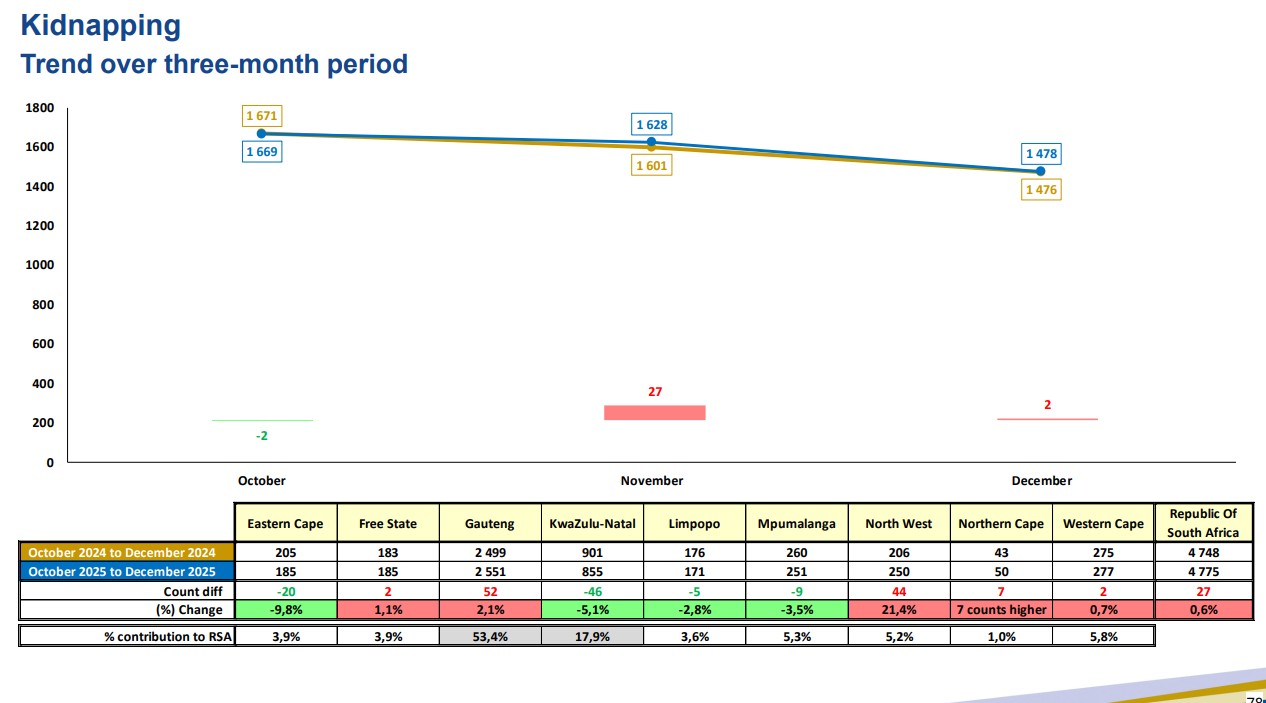
Kidnapping remains a serious safety concern in South Africa, particularly in Gauteng, which accounts for more than half of reported cases nationally.
According to the South African Police Service (SAPS) crime statistics for October to December 2025, 4 775 kidnapping cases were reported across the country during this period. Gauteng alone accounted for over 53% of these incidents.
Ruan Vermaak, communication manager at CrisisOnCall, explains, “Many people think kidnapping only happens in high-profile ransom cases. While some incidents involve organised criminal networks targeting specific individuals, many occur opportunistically during crimes such as hijackings or armed robberies. In other cases, criminals may monitor routines and target victims during everyday activities such as commuting, arriving home, or leaving work.”
Ransom and extortion remain key drivers
Victims come from a wide range of backgrounds. Business owners, professionals, parents collecting children from school, and individuals travelling alone can all become targets when criminals believe there may be financial gain.
In some cases, criminals gather information beforehand by observing routines, monitoring homes or workplaces, or using personal information shared online.
Warning signs people often overlook
Although kidnappings may appear sudden, warning signs sometimes exist beforehand. These can include unfamiliar vehicles repeatedly parked near a home or office, individuals asking unusual questions about schedules, or suspicious activity near entrances and parking areas.
“Criminals rely heavily on information,” Vermaak explains. “The more predictable someone’s routine or the more personal information that is publicly available, the easier it becomes to plan a crime.”
Security specialists therefore recommend limiting the sharing of personal details on social media and remaining alert to unusual activity in everyday environments.
Preparedness can improve response times
While no precaution can eliminate risk entirely, practical preparedness can help improve safety. Experts recommend reviewing home and workplace security arrangements, varying daily routines where possible, and ensuring family members know who to contact in an emergency.
Technology can also assist during high-risk situations.
“Services such as our Protect Me mobile panic response system allow users to immediately alert a control centre if they feel threatened,” says Vermaak. “The panic button connects the user to our national call centre and automatically dispatches the closest armed response vehicle to their GPS location.”
In situations where someone feels vulnerable or unsafe, rapid access to assistance can help ensure a faster response.
“Preparedness ultimately reduces vulnerability,” Vermaak says. “The more aware people are of the risks and the tools available to them, the better equipped they are to respond when something goes wrong.”
More information about CrisisOnCall services is available at
https://www.crisisoncall.co.za
Follow them on social media:
Facebook: https://www.facebook.com/CrisisOnCall
Instagram: https://www.instagram.com/_crisisoncall/
*Source: South African Police Service Crime Statistics (October-December 2025)
https://www.saps.gov.za/services/downloads/2025/2025-2026_-_3rd_Quarter_WEB.pdf
Kidnapping in South Africa: growing concern and safety guidancehttps://t.co/zZFJUId5KY#ArriveAlive #Kidnapping @CrisisOnCall pic.twitter.com/hlP53iNQxt
– Arrive Alive (@_ArriveAlive) March 5, 2026