
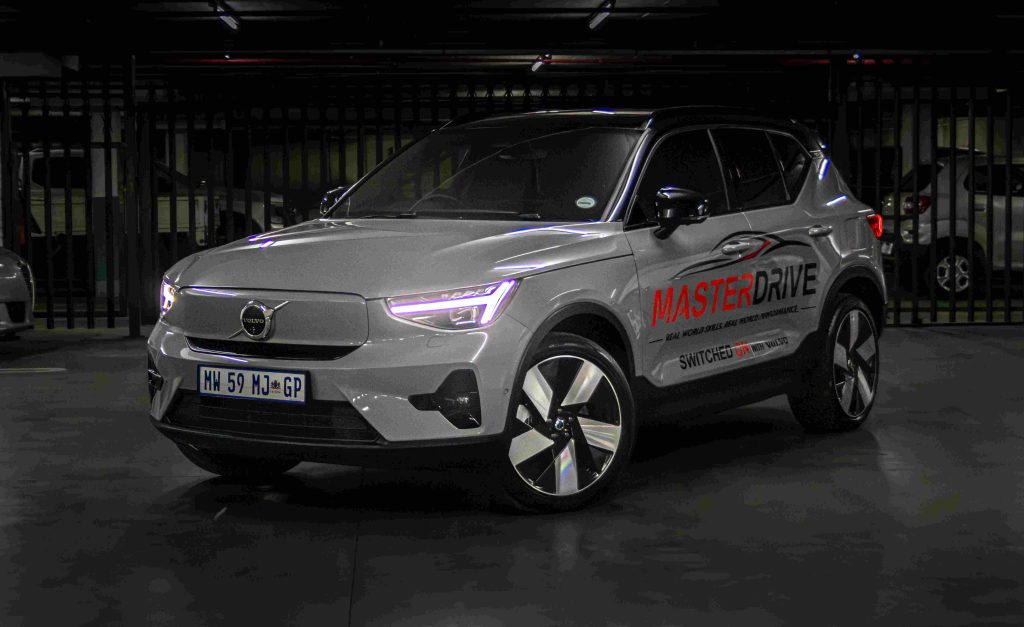
As South Africa’s fleet industry accelerates its shift toward electric mobility, MasterDrive took its place among key voices driving this transition at the FNB Wesbank EVolution Conference this week. MasterDrive addressed the critical differences between driving internal combustion engine (ICE) and electric vehicle (EV) powered fleets.
The CEO of MasterDrive, Eugene Herbert, says South Africa’s EV market sold 3 487 units in the first quarter of 2025 while sales in the first quarter of 2026 were already at 4585, according to naamsa data. “As tax incentives for local EV manufacturing and charging infrastructure expands, pressure grows to electrify fleets. Yet, one crucial factor is often overlooked: driver readiness.
“EVs demand more than simply getting behind the wheel and driving as usual. It often requires drivers to unlearn years of ICE-honed habits. Instant torque delivery affects acceleration, while regenerative braking alters braking behaviour and following distances.”

There are also safety implications to the near-silent operation of an EV. “It is a real risk to pedestrians who no longer hear vehicles approaching. Additionally, high-voltage systems inherent to EVs emphasise why untrained drivers face greater risks in an EV than they might assume.
“For fleets, the stakes extend beyond safety. Driving style directly impacts battery range, charging frequency, tyre wear, brake wear, and overall operating costs. Undertrained drivers do not just pose a safety risk but actively erode the return a fleet should see with EV investment.”

MasterDrive’s EV Driver Development Programme is built to close this gap. “After extensive research and collaboration with our international partners we launched a bespoke programme suited to the local market.
“While we combined ‘best practice standards’ from multiple countries that have experienced the journey, our training programme is a uniquely South African driver advancement program, suited to our fleets and their unique circumstances.”

The programme is structured to move with the adoption opportunities and challenges of South Africa. Drivers are equipped to be safe, confident EV drivers with the behavioural adjustments that accompany this. Additionally, the programme skills drivers to get the most range, efficiency and battery life from the vehicle. “The programme teaches drivers how much further and economically they can drive EVs. That is a skill, not a given, and it is one we can teach.”
MasterDrive tested these principals behind the wheel of the Volvo XC40. It allowed for the gathering of qualitative, on-road data on how these skills increase range and efficiency outcomes. “One such example was experienced when I drove without touching the brakes once, relying instead on regenerative braking. It was an adjustment, but I arrived with more range than when I left. It shows exactly what is possible with the right he technique.”
Adding some friendly competition to the event, the conference hosted a CEO Challenge, pitting company leaders against one another to see who could extract the greatest range from various EVs. “They competed in three entry-level electric delivery vehicles, the Valternative, Everione and MellowVan, equipped with the latest Geotab Telematics.
“It measured driver behaviour, vehicle performance and fleet efficiency. The experience was a hands-on, memorable way of illustrating that how you drive an EV matters just as much as what you drive,” says Herbert.

MasterDrive’s presence at the conference reinforced a simple message: electrifying a fleet is only half the journey. Making sure drivers know how to get the best out of their EVs is what makes that journey sustainable.